The 5-Level Trust Ladder for AI Autonomy
Most companies deploy AI agents with an all-or-nothing approach. Here's a better framework: five levels of progressive autonomy that mirror how you'd onboard a human employee.
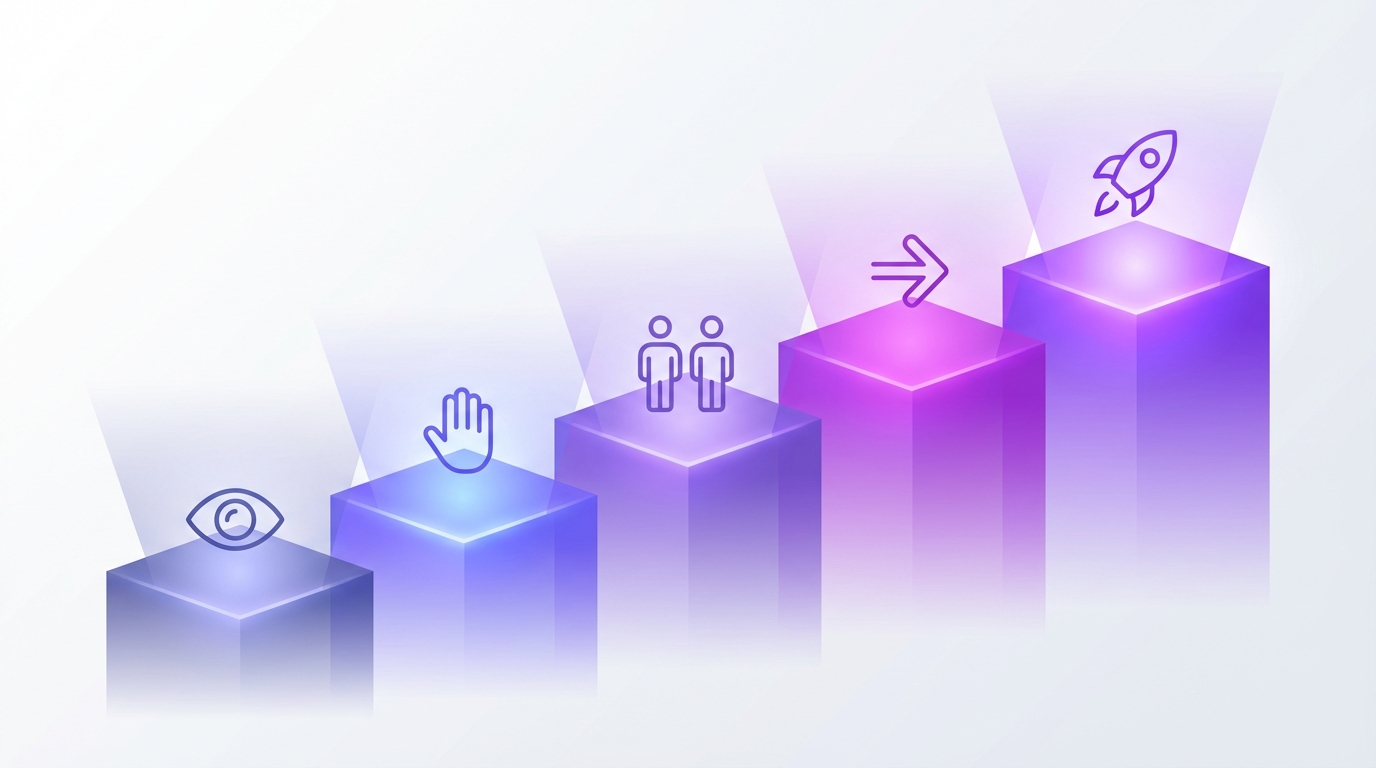
Most companies approach AI deployment with a binary mindset: either the AI does everything autonomously, or a human approves every action. Both approaches fail.
Full autonomy scares stakeholders and creates risk. Full human-in-the-loop defeats the purpose of deploying AI in the first place. You need something in between — a graduated path from observation to full autonomy.
At OpFleet, we use what we call the Trust Ladder: five distinct levels of autonomy that mirror how you'd onboard a human employee.
Level 1: Read Only
The operator observes your workflows, reads your data, and builds understanding. It doesn't take any action — it learns.
This is the equivalent of a new hire's first week: sitting in meetings, reading documentation, understanding how things work before touching anything.
What it looks like in practice: Your AI research analyst reads your competitor tracking sheets, ingests your market reports, and learns your industry vocabulary. By the end of week one, it understands your competitive landscape without having changed a single thing.
Level 2: Suggest
The operator starts making recommendations. It analyzes situations, identifies patterns, and proposes actions — but never executes. Every suggestion goes to a human for review.
What it looks like: Your AI operations manager flags that three projects are trending behind schedule and recommends specific resource reallocations. You decide whether to act on each suggestion.
This level is where most teams realize the AI is actually useful. The quality of suggestions improves rapidly because the operator has been observing real workflows, not working from generic training data.
Level 3: Act with Approval
The operator drafts complete actions — emails, code changes, reports, data updates — and queues them for your approval. One click to approve, one click to reject with feedback.
What it looks like: Your AI content producer writes a full blog post, formats it for your CMS, selects images, and drafts social media posts. Everything sits in a review queue. You approve, edit, or reject each piece.
This is where the productivity gain becomes dramatic. The operator does 90% of the work; you provide the remaining 10% as quality control.
Level 4: Act and Inform
The operator executes autonomously and sends you a summary after the fact. You're informed, not asked. If something goes wrong, the operator flags it immediately and pauses for guidance.
What it looks like: Your AI project coordinator sends status updates to stakeholders, reschedules meetings based on conflicts, and updates project timelines — then sends you a daily digest of everything it did.
Most teams reach this level within a month of deployment. By this point, the operator has handled hundreds of tasks successfully, and you've built genuine confidence in its judgment.
Level 5: Full Autonomy
The operator runs end-to-end. You review weekly summaries and set strategic direction. The operator handles execution, prioritization, and exception management independently.
What it looks like: Your AI recruiter manages the entire top-of-funnel hiring process — sourcing candidates, screening resumes, scheduling interviews, and sending follow-ups. You review a weekly report and step in only for final-round decisions.
Why This Matters
The trust ladder solves three problems:
-
Risk management. You never deploy more autonomy than you've validated. Each level proves the operator's reliability before graduating to the next.
-
Stakeholder buy-in. It's much easier to get approval for "let's try a read-only AI analyst" than "let's deploy a fully autonomous agent." The ladder gives skeptics a comfortable on-ramp.
-
Continuous improvement. At each level, the operator receives feedback that makes it better. By the time it reaches Level 5, it's been refined through hundreds of real interactions.
The Key Insight
AI autonomy isn't a feature you toggle on. It's a relationship you build — exactly like trust between humans. The companies that understand this will deploy AI successfully. The ones looking for a magic switch will keep failing.
At OpFleet, every operator starts with a trust ladder customized to your team's comfort level. Most reach Level 4 within 30 days. Deploy your first operator →